
Arrest Warrants in Charlotte County
In Charlotte County, a magistrate weighs a sworn complaint under Va. Code §19.2-72 and can issue an arrest warrant once the statutory probable-cause test is met. The order names or describes the person, lists the offense, directs an arrest, and bears the issuing authority's signature. Issuing one only starts the process, though. It settles nothing about the charge. A complaint can come from law enforcement or another authorized source, and in some situations statute lets a summons serve instead. The label on the paper matters, so if you are unsure which process was entered, ask the issuing clerk or the magistrate directly. That question takes a minute and saves real confusion later.
Charlotte County Arrest Warrant Issuance
The Virginia courts' blank DC-311 form shows the structure a Charlotte County complaint follows: accused identity, offense date and place, factual statement, complainant, oath, and issuing authority. It is a schema example only, and a member of the public cannot file it without court-specific direction. The form carries no private names or case details.
Not every complaint becomes an arrest warrant in Charlotte County. Va. Code §19.2-73 and §19.2-74 describe when a summons may be chosen instead, so check the process title before assuming arrest.
What a Charlotte County Arrest Warrant Contains
Virginia law sets core elements for an arrest warrant, but a Charlotte County public case index may expose only part of the signed paper. Match the process to the issuing court and case number. Do not publish an unredacted complaint, date of birth, address, or witness details.
| Case or process number | Number printed on the court paper; no local sample format was published. |
|---|---|
| Named person | The warrant identifies or describes the person to be arrested. |
| Charge / Offense | The order states the offense for which arrest is directed. |
| Issuing authority | The warrant must carry the signature of the authorized judge or magistrate. |
| Bond / Bail | Ask the magistrate or court; no uniform county amount is stated. |
| Issue date | Use it to identify the document and ask whether later action changed it. |
Charlotte County Arrest Warrant Fields
Read the issuing authority and offense on the paper itself rather than trusting a short online label. The warrant's command, person description, and signature tie the process to one specific case, and an affidavit may be sealed or temporarily restricted. Use the docket to find the location, then ask the correct Charlotte County clerk what portion can be inspected. A search result is not a copy of the warrant, and it may not show later service, recall, or bond action. Va. Code §19.2-72 sets the complaint and warrant requirements, while separate search-warrant rules appear in §§19.2-54 and 19.2-56.
How Charlotte County Arrest Warrants Are Served
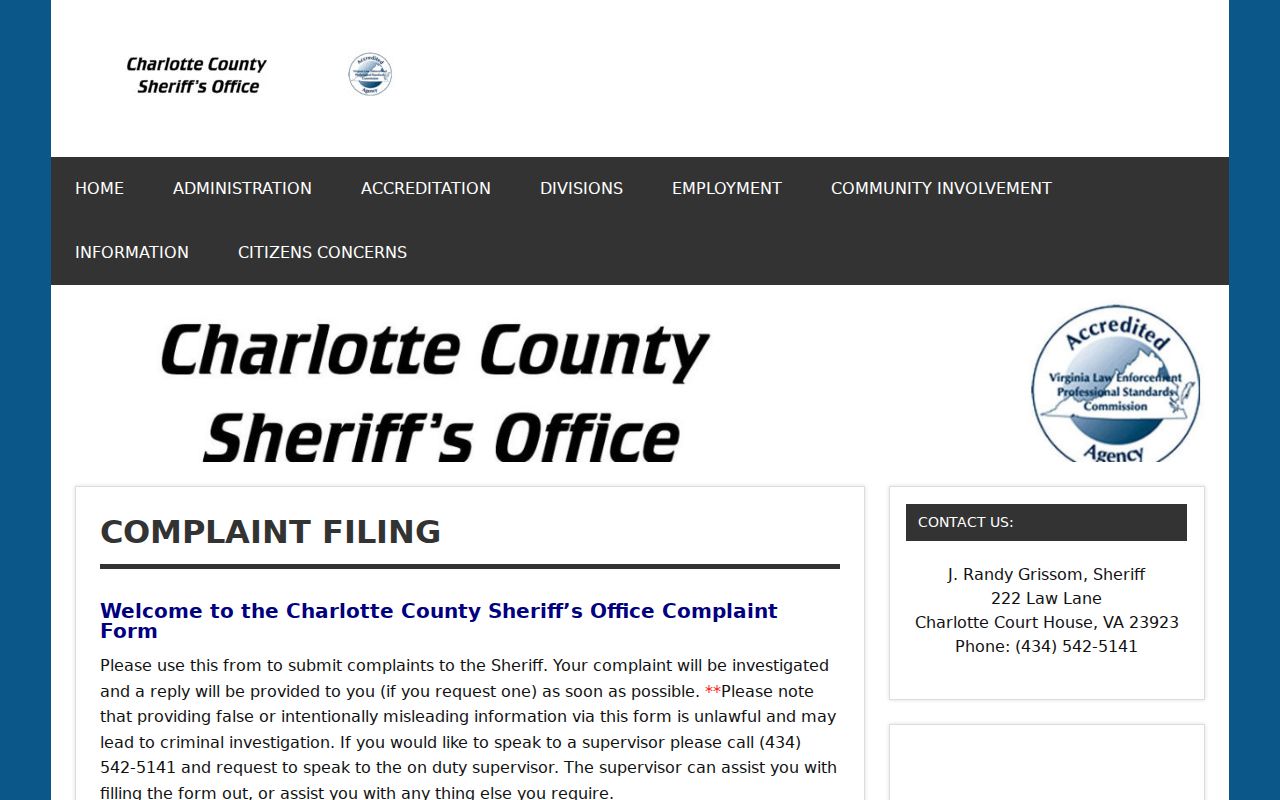
The Charlotte County Sheriff's Office is the county law-enforcement agency, handling service, prisoner transport, investigations, and jail operations, with Virginia State Police providing traffic and investigative support. The Sheriff's public website names no dedicated warrant unit, direct warrant line, or walk-in status desk, so use the main office number and let staff route the call. Virginia Code §19.2-76 governs execution and permits process to be carried out across the state as the law allows. An arrest outside the issuing locality takes the person through a judicial officer and bail procedure. The court or magistrate, not a website, sets any release terms.
Charlotte County Arrest Warrant Service Route
For a Charlotte County GDC case, call the clerk at 434-542-5600. Circuit records use 434-542-5147, JDR uses 434-542-5104 with protected-record rules, and the Sheriff's main line is 434-542-5141 at 222 Law Lane. None is a special warrant hotline.
Charlotte County Sheriff’s Office
222 Law Lane
Charlotte Court House, VA 23923
434-542-5141
Call before traveling to the Charlotte County jail. The public jail page posts visitor rules, but it offers no warrant-clearing window and promises no particular booking or release result.
Arrest Warrant vs Summons vs Bench Warrant
Virginia statutes allow different papers for different situations. A summons orders an appearance, while an arrest warrant directs officers to arrest. A bench warrant or capias brings someone back to court after an existing obligation. See Charlotte County bench warrant steps for the missed-court route.
| Feature | Arrest Warrant | Summons | Bench Warrant |
|---|---|---|---|
| What It Orders | Arrest of a described person | Appearance on a stated date | Return before the issuing court |
| Basis | Probable cause under the statute | Procedure allowed by law | Missed appearance or other order |
| Who Issues It | Magistrate or authorized judge | Court or authorized officer | Issuing judge or court |
| How to Respond | Confirm with counsel and court | Attend as directed | Ask the court about recall or hearing |
Charlotte County Federal Warrant Boundary
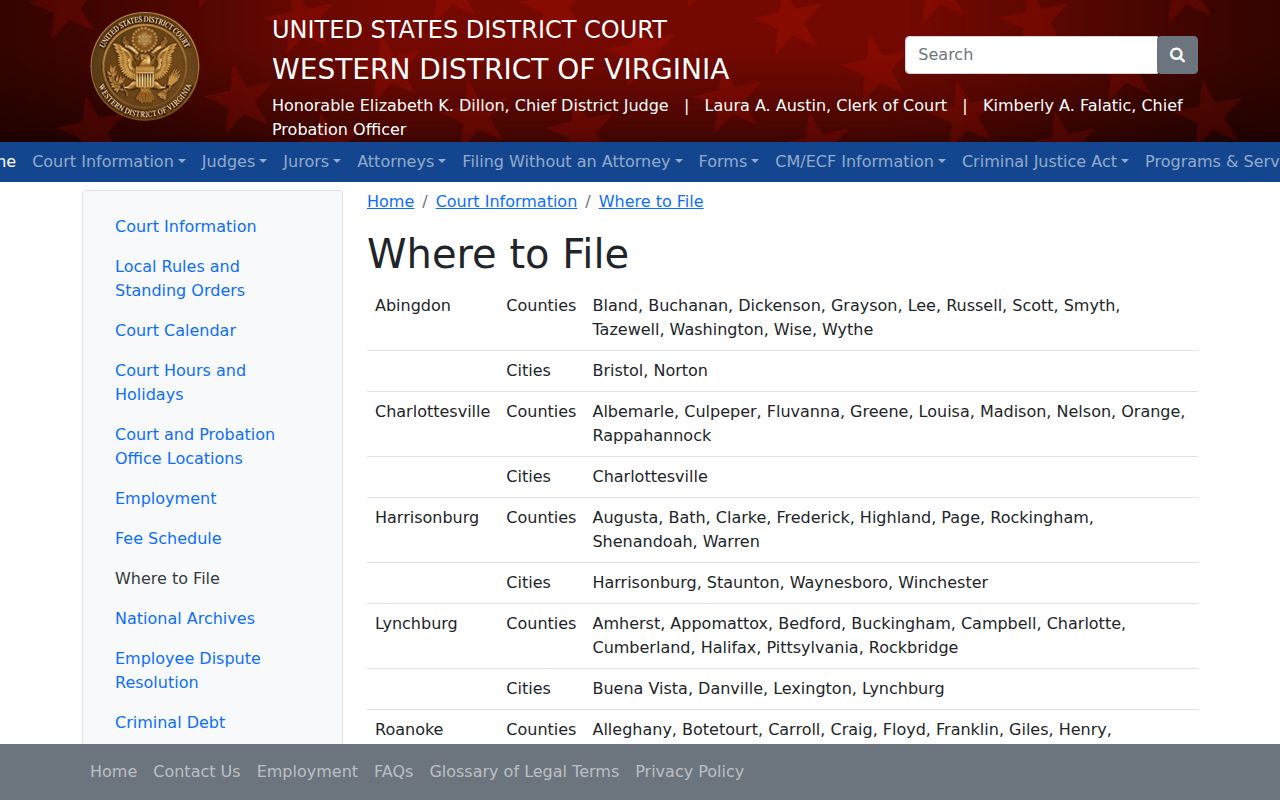
A federal warrant will not show up in a Charlotte County or Virginia case search. Charlotte sits in the Western District of Virginia's Lynchburg Division, and the division's official where-to-file page shows the filing boundary. PACER searches public federal dockets, but sealed or unserved warrant material may not appear. For a personal federal matter, use counsel, the federal clerk, or the U.S. Marshals contact route.
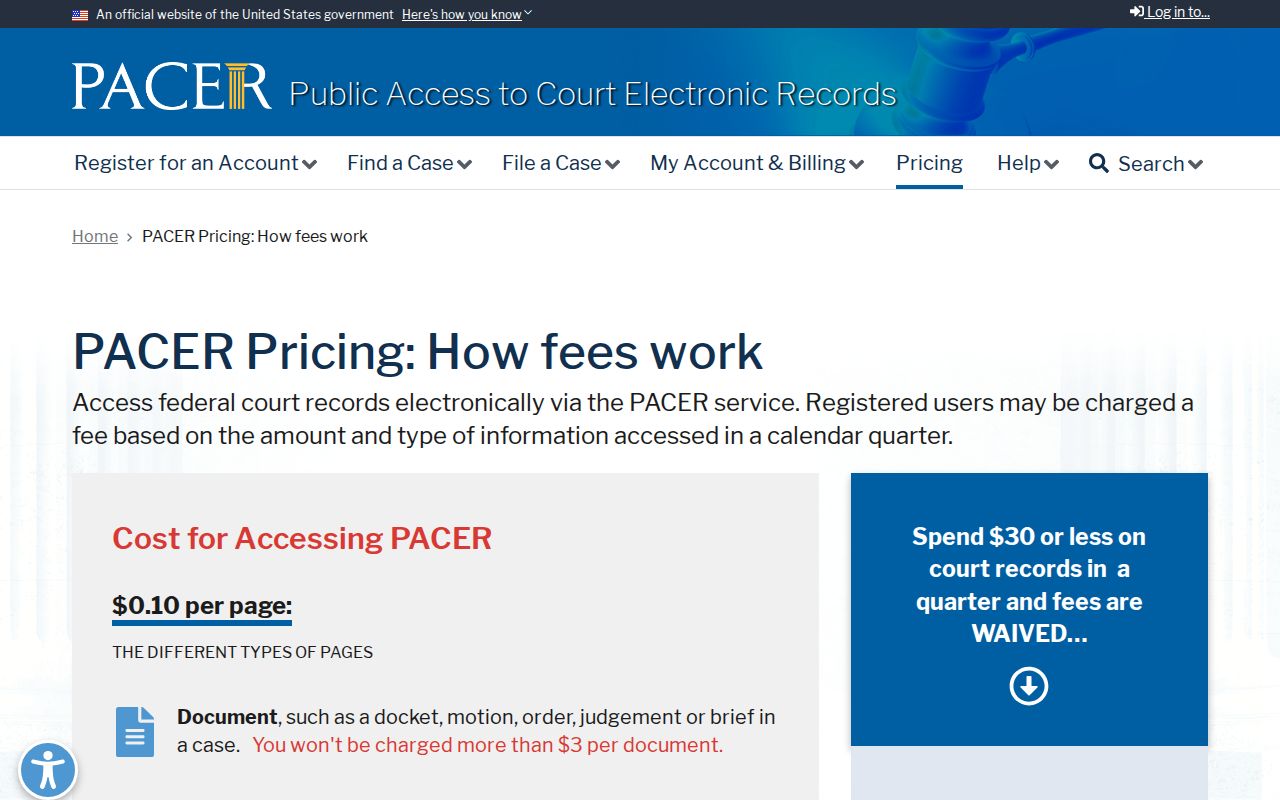
Use PACER for public federal docket records. It is not a guarantee of warrant status. PACER explains its account and document-access fees, and the U.S. Marshals Service directory supplies a district-office contact route. Neither page confirms an individual's status, so Charlotte County residents with federal questions should go through counsel or the clerk.

What to Do If There Is a Warrant for You
Confirm the issuing court and process title before making any plan. A Charlotte County attorney can review whether a voluntary appearance, bond hearing, or motion to recall or quash is available. The Sheriff can explain enforcement-side routing, but only the issuing court can withdraw its order. Ask what identification and papers you need and where to report.
Important: Do not rely on a search result to predict arrest, bond, or release. Contact counsel and the official court before taking action.
Charlotte County Arrest Warrant Confirmation
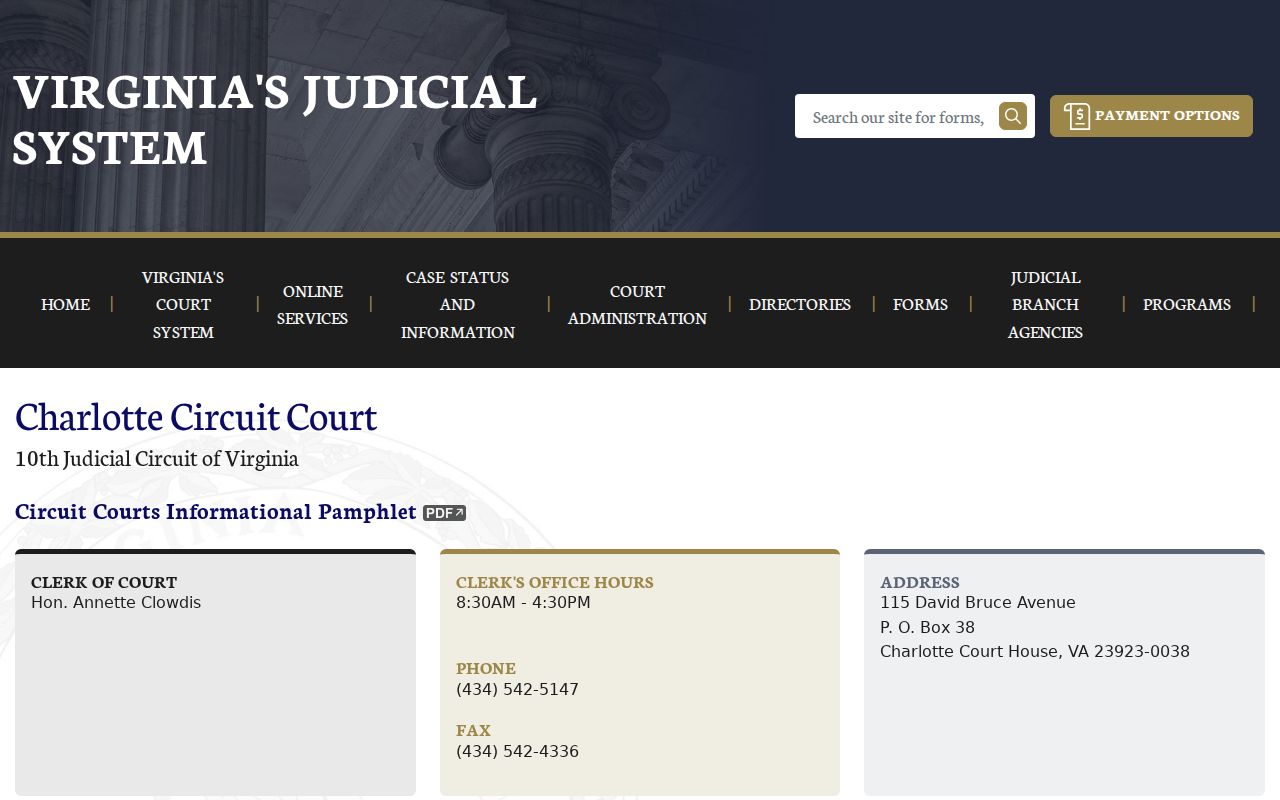
Charlotte County splits warrant confirmation by court. Felony indictments and Circuit capias questions go to the Circuit clerk at 434-542-5147. For a GDC misdemeanor or a traffic warrant, call that clerk at 434-542-5600. JDR matters must go through the protected clerk route. If your paper names no court, the Sheriff's Office can tell you which agency handles the inquiry. The official Charlotte Circuit Court page names its clerk and posts the office hours.
Keep any written direction from a Charlotte County court, plus every file-stamped order. Then check back with the same clerk once the update period has passed.