
How to Search for a Warrant in Charlotte County
Begin with the court on the ticket, summons, or notice. The official Virginia GDC system lets a user select Charlotte and search public adult case details by party name, case number, or hearing date. It is not a real-time warrant-status service, and a Circuit or JDR matter needs its own clerk route.
Have the case papers nearby for your own use. Do not put a birth date, Social Security number, or docket screenshot into a public form that does not ask for it. A family member should ask the person’s permission and the clerk about any needed authorization.
- Select Charlotte GDC, then search by the name on the paperwork, case number, or hearing date.
- Call the GDC clerk at 434-542-5600 to ask whether a listed process is current.
- For a Circuit matter call 434-542-5147; for JDR call 434-542-5104 and ask about access limits.
- Call the Sheriff’s main office at 434-542-5141 for routing, or request an existing Sheriff record under Virginia FOIA.
- For a federal issue use counsel, the federal clerk, or PACER. Confirm any next step with the responsible court.
Charlotte County Case Search Scope
The GDC search begins with an individual court selector. The public interface describes name, case number, and hearing date as ways to locate a case. It does not document a warrant-specific field, required birth date, wildcard behavior, or a countywide warrant feed. Do not tell a reader to enter an identifier that the interface does not request.
The image links to the official selector, which shows why choosing the correct locality matters:
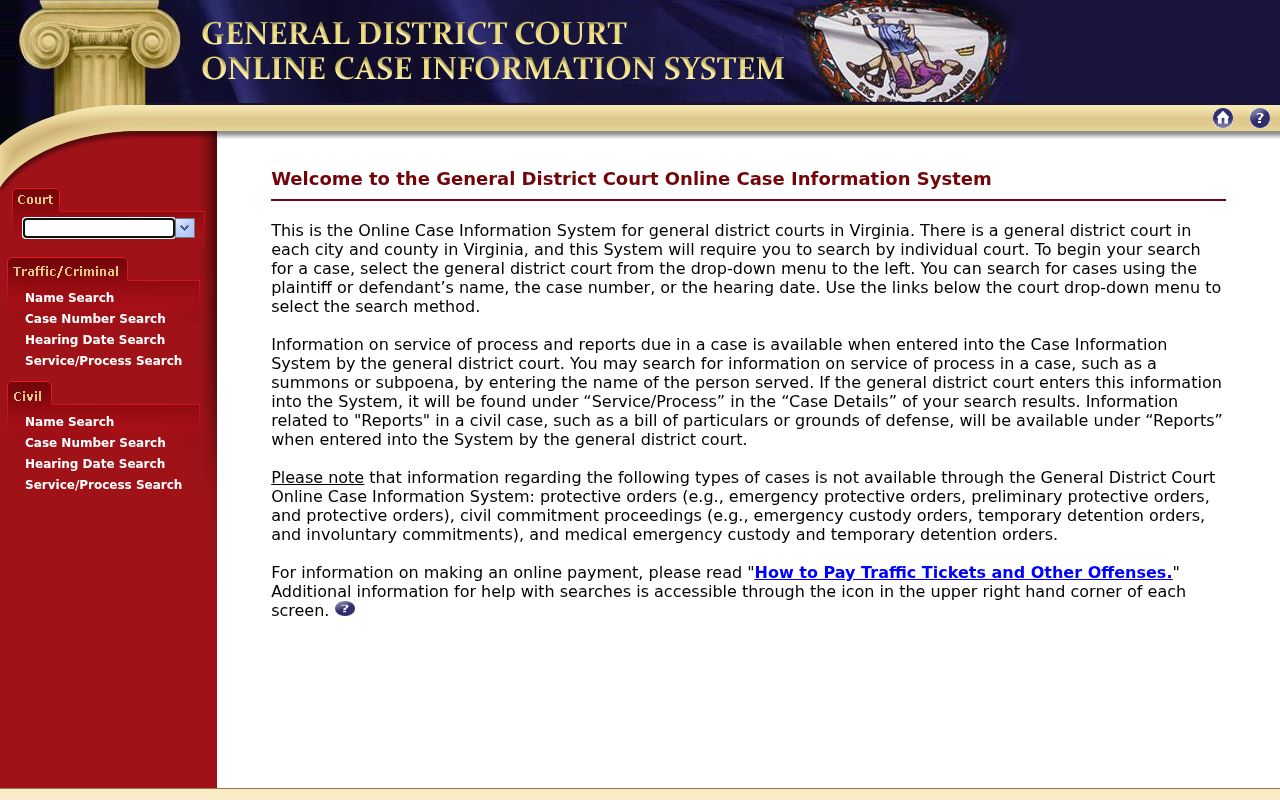
Search the public case record, then ask the clerk about current process. Search behavior can vary with the record and the court selected.
Charlotte County Warrant Search Fields
Only the fields named in the GDC system description are shown below. “Required” and exact format rules were not confirmed in the public landing text. If a common name returns more than one case, use the case number and hearing date from the person’s own court papers, then confirm with the clerk.
| Field Label | Type | Required | Notes |
|---|---|---|---|
| Party name | Text | Not stated | Use the spelling shown on the case paper. |
| Case number | Text | Not stated | Use the number assigned by the court. |
| Hearing date | Date | Not stated | Search by the date shown on the notice. |
| Court selection | Locality selector | Before search | Select Charlotte GDC for a GDC case. |
Charlotte County Warrant Search Limits
The statewide case-information system covers adult criminal JDR, criminal and traffic GDC, and selected Circuit information. Circuit search remains locality-specific. JDR results are limited to protect confidentiality, and some protective orders, civil commitments, or medical emergency custody orders are excluded from the GDC search.
The official Virginia case-information page describes those boundaries. Its public display may not include a sealed, newly entered, or unserved warrant. An empty result is a reason to ask the clerk, not to assume there is no process.
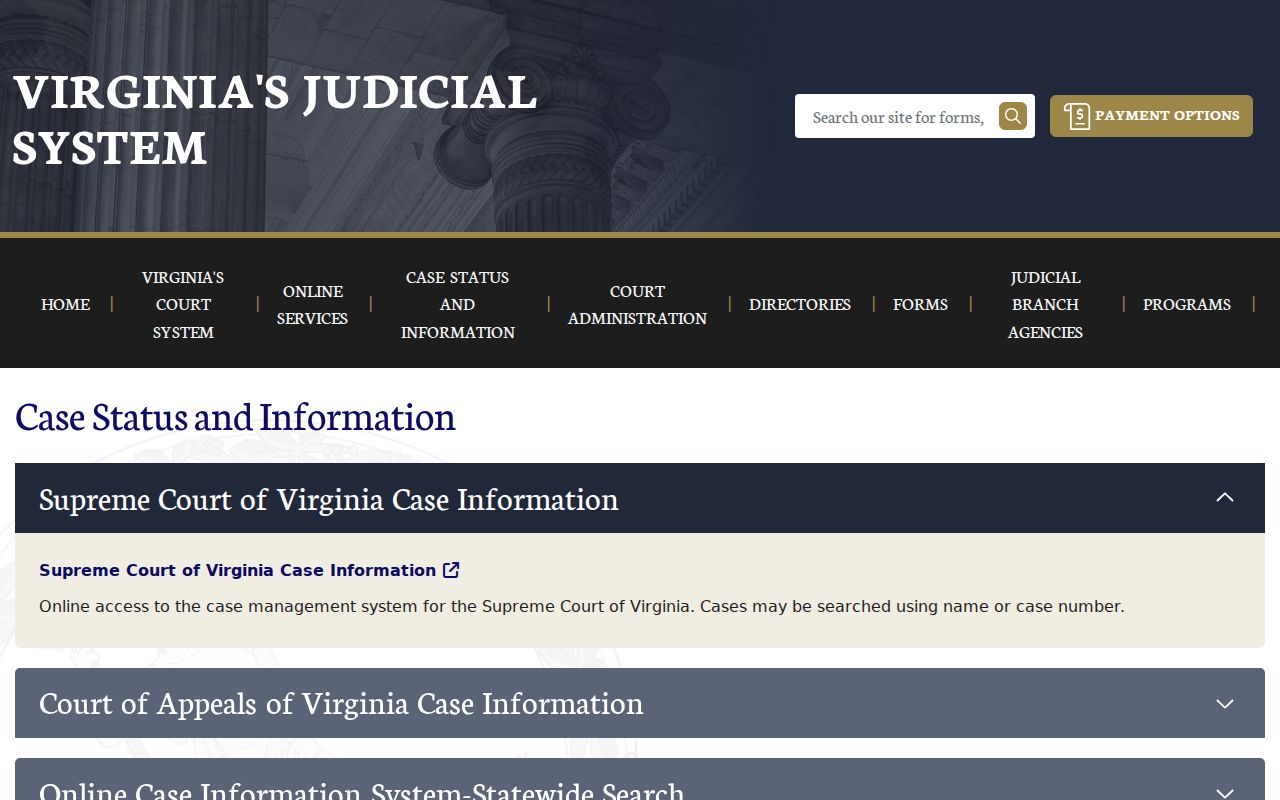
What a Charlotte County Warrant Search Returns
A matched case can show an event, court, offense, and hearing date, but it may not show a current warrant status. Service information can appear in case details when entered. Read the court name and case number first, then ask the clerk to explain any capias, failure-to-appear, or warrant entry.
| Case number | Number on the court notice; no local warrant-number format was published. |
|---|---|
| Charge / Offense | Read the exact case entry and do not infer more than it states. |
| Issuing Court | Charlotte GDC, Circuit, or JDR, depending on the case. |
| Hearing date | Use the listed event as a lead and confirm any new date with the clerk. |
| Status | Ask whether process is active, served, recalled, or otherwise changed. |
Charlotte County Warrant Search Gaps
A GDC search cannot answer every Charlotte question. Circuit records are separate, JDR information is protected, federal cases sit outside the Virginia index, and the Sheriff does not publish a full warrant database. The case system can also lag or omit sealed and unentered material.
The record-request route depends on what you need. Ask the Circuit, GDC, or JDR clerk for a court file. Ask the Sheriff’s FOIA contact for an existing agency record. Virginia’s court guidance says clerk case records are requested through the clerk process, not a general agency FOIA request.
Where Charlotte County Warrants Are Checked
Charlotte has three local court clerk routes: Circuit, GDC, and JDR. The General District clerk is at 115 David Bruce Avenue and answers at 434-542-5600; Circuit uses 434-542-5147, and JDR uses 434-542-5104. The Sheriff’s main office is at 222 Law Lane, 434-542-5141. Those are public office contacts, not dedicated warrant hotlines.
Use the court printed on the paperwork. Town residents do not have separate public warrant portals in the reviewed sources. Federal concerns need the Western District of Virginia’s Lynchburg Division route, not a Charlotte GDC search.
Charlotte General District Court
115 David Bruce Avenue
Charlotte Court House, VA 23923
434-542-5600
Charlotte County Warrant Records Requests
For a court document, the Virginia Judiciary directs requests to the clerk who keeps that case. Search and copying costs may apply, and a deposit may be required for larger requests. For a Sheriff record, describe the existing record, a date range, and the subject category under Virginia FOIA. Ask for a fee estimate before work begins.
The court public-records page explains the clerk route. The image below links to the official request information:
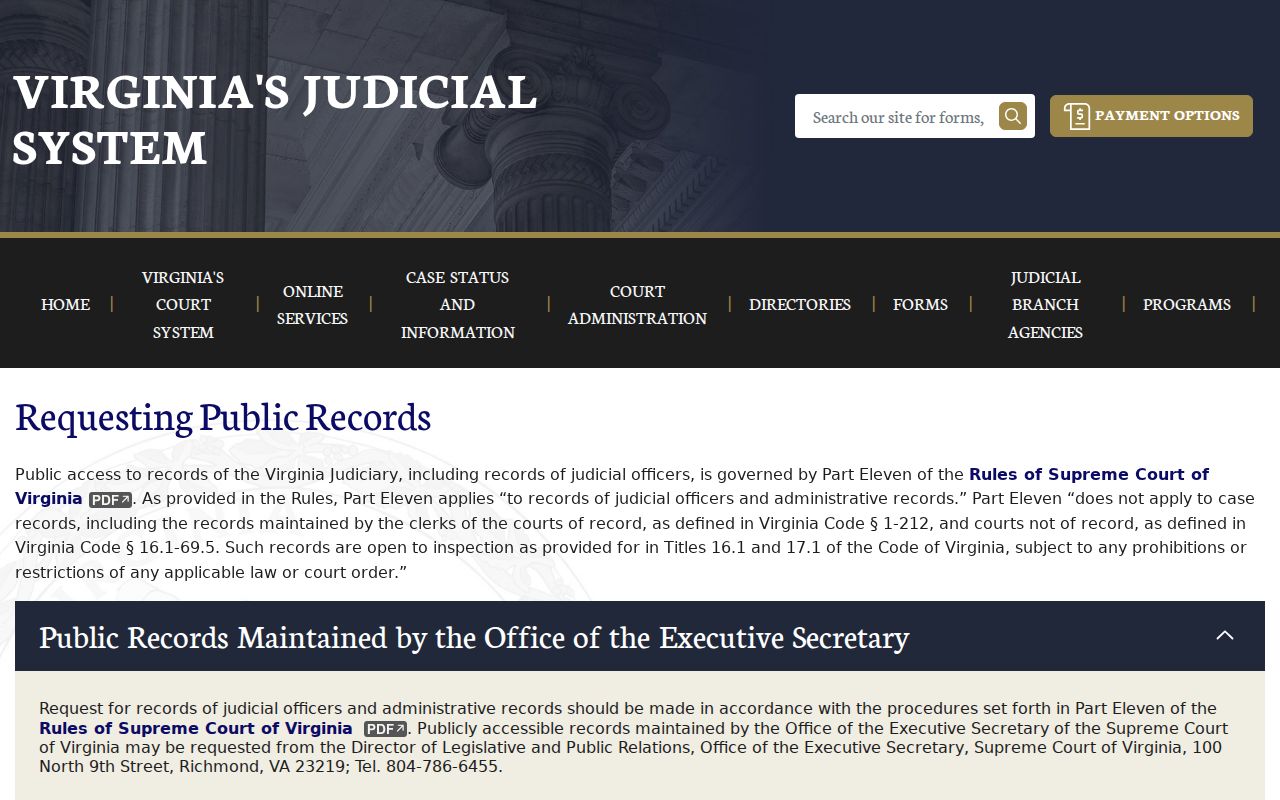
Do not use the Sheriff’s complaint form to ask about warrant status. It is for complaints about incidents, not a court-record request.
Access and Restricted Warrants
Virginia FOIA allows access to many agency records, but law-enforcement exemptions and court rules limit what is public. A sealed warrant, investigative file, or juvenile record may not appear in an online search. JDR is the correct office for a person’s own protected matter or an authorized request.
Key Rules:
Virginia FOIA permits exemptions for some law-enforcement and investigative material.
Va. Code §16.1-301 restricts juvenile law-enforcement records.
A missing online result does not prove there is no warrant; confirm with the issuing clerk or counsel.
Charlotte County Warrant Search Scam Checks
Virginia courts warn that they do not demand payment by phone, text, or email while threatening immediate arrest. If a caller mentions a warrant or case number, end the call and find the official number on the court or Sheriff website yourself. A correct name or partial number does not prove the caller is genuine.
Use a secure Virginia Judiciary payment route or ask the clerk how to pay. Do not share bank details or send gift cards, wire transfers, or cryptocurrency to someone who promises to erase a warrant.