
Bench Warrants in Charlotte County
“Bench warrant” is common speech for court-issued process that brings a person back before the court. Virginia forms may call it a capias or capias to show cause. In Charlotte, the issuing court matters: GDC handles many traffic and misdemeanor cases, Circuit handles felony matters, and JDR holds juvenile and family cases.
A missed hearing, failure to follow a court order, or a payment-default proceeding can lead to further process in circumstances set by law. It is not safe to assume every missed date produces a warrant or that every court uses the same document.
Charlotte County Bench Warrant or Capias?
Virginia court forms use “capias” for process that may be called a bench warrant elsewhere. A capias to show cause is tied to a court order or hearing, while an arrest warrant usually follows a complaint and probable-cause review. Ask the clerk for the exact title and the date it was entered.
Va. Code §19.2-128 addresses failure to appear and recognizes circumstances that may matter to the court. The statute does not mean every late arrival or missed traffic date is a new felony. The charge, notice, reason, and judge’s action all matter.
Read Va. Code §19.2-128 with the court’s docket entry rather than relying on a generic “FTA” label.
How Charlotte County Bench Warrants Are Issued
The court reviews the missed event or unmet order and decides what process to enter. Depending on the matter, the court may set another date, issue a summons, enter a capias, or start a show-cause procedure. The online case index can show a docket event, but only the court can confirm the current process.
Charlotte GDC’s public Friday schedule lists advisements, attorney traffic, traffic, criminal, and PCS/VASAP sessions. It does not say that a person with a capias may walk into any session. Call the clerk before appearing or changing travel plans.
Charlotte County Bench Warrant Search Route
For a likely GDC matter, select Charlotte in the Virginia online system and search by name, case number, or hearing date. Follow the result with a direct clerk call at 434-542-5600. Circuit questions go to 434-542-5147, while JDR uses 434-542-5104 and applies confidentiality limits.
The official Charlotte GDC page lists its Friday docket. The clerk image below identifies the public court contact, not a walk-in recall desk:
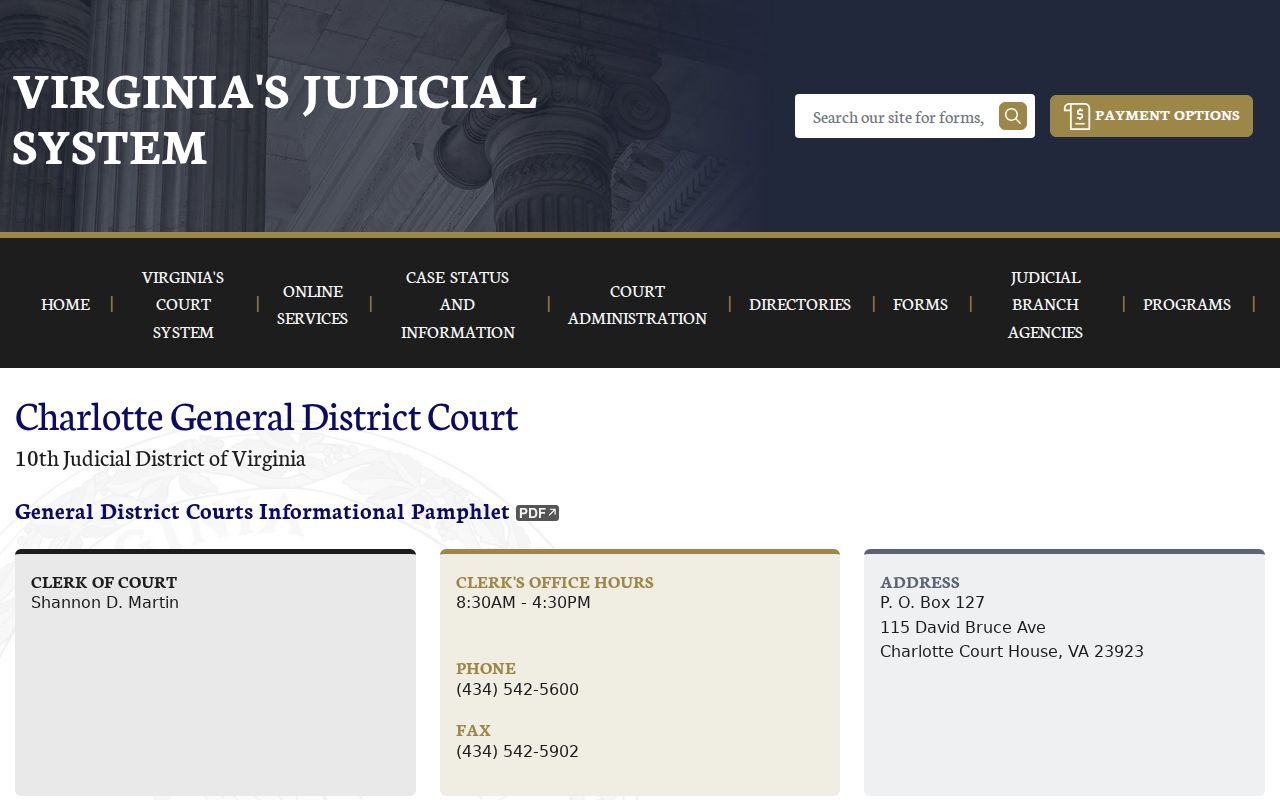
Ask what document was entered, whether it remains open, and what motion or hearing the court requires.
Bench Warrant vs Arrest Warrant
Both can direct an arrest, but they begin differently. A bench process is tied to an existing case or court order. An arrest warrant can follow a sworn complaint and a magistrate’s probable-cause decision. The court paper and issuing authority show which process is involved.
| Feature | Bench Warrant | Arrest Warrant |
|---|---|---|
| Trigger | Missed hearing or court order | Sworn complaint and probable-cause finding |
| Who Issues It | Issuing judge or court | Magistrate or other authorized judge |
| Underlying Case | Existing case or obligation | Reported offense or charge |
| Next Step | Ask the court about recall or hearing | Confirm charge, court, and counsel route |
Charlotte County Bench Warrant Court Levels
The case type points to the first clerk. GDC is the usual starting place for local adult traffic and misdemeanor matters; Circuit keeps felony indictment and related capias records. JDR handles juvenile, support, and family proceedings. A general online search can miss protected JDR material and may not answer a Circuit question.
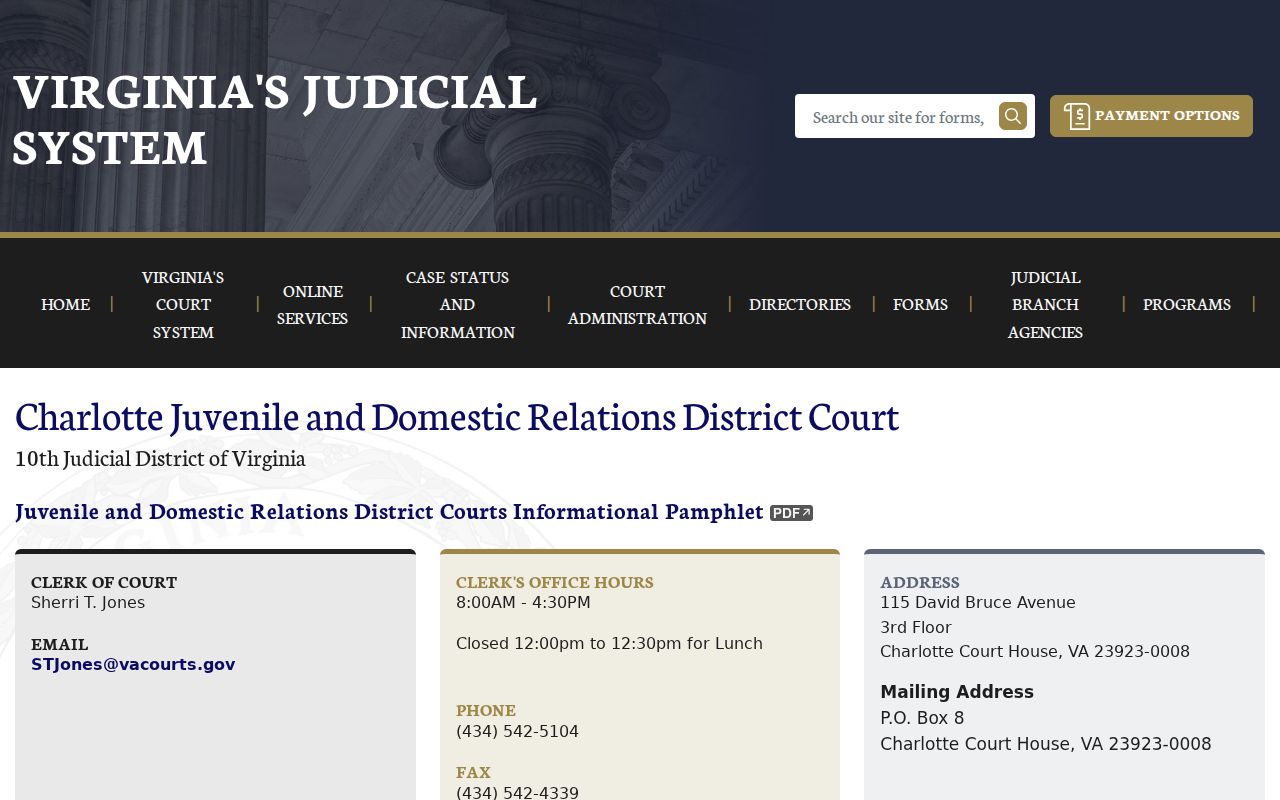
The Charlotte JDR page names its clerk and schedule. The image below links to that official route. A parent or relative should ask what authorization is required before requesting information.
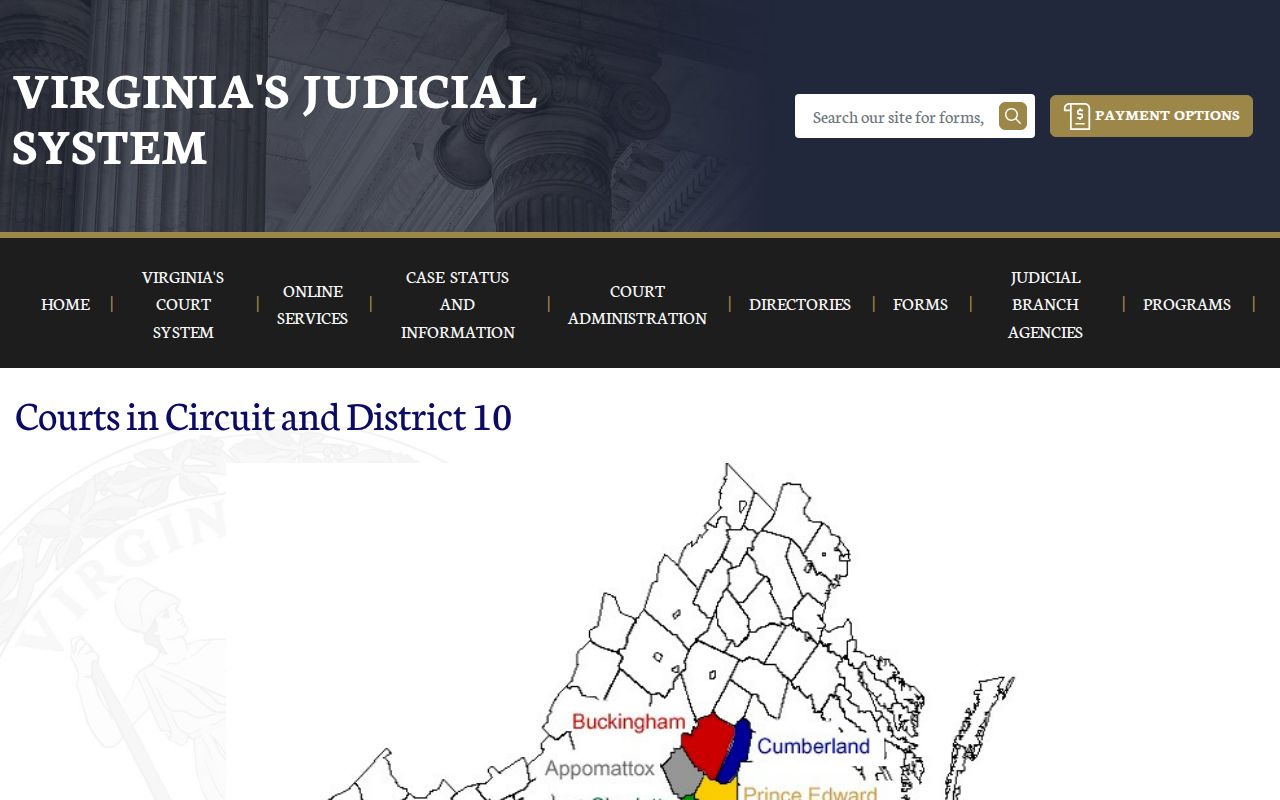
The official map places Charlotte in the 10th Judicial Circuit. It shows court geography, not which court issued a person’s capias.
Resolving a Charlotte County Bench Warrant
The court that issued the process controls recall, quashing, a new hearing, or another remedy. A clerk can explain filing steps, but not choose a legal strategy. A lawyer can check whether a motion, voluntary appearance, or bond hearing fits the case. Charlotte’s public sources do not list a countywide walk-in warrant calendar.
- Ask the clerk which court entered the process and whether it is still open.
- Speak with a lawyer about recall, quash, appearance, or bond options.
- Confirm the required date, location, documents, and whether counsel should coordinate.
- After court action, request the order and ask how to verify the docket update.
Caution: Do not assume a missed court date has no effect. Confirm the process with the clerk and make a lawful plan with counsel.
Charlotte County Bench Warrant Payment Limits
Virginia’s payment-plan program leaves local terms to each court. Charlotte GDC has an official local policy PDF, but exact amounts and hours were not extractable from the inspected rendering. Ask the clerk about any deposit, installment, fee, and hearing requirement before relying on a plan.
A payment may satisfy a balance or start an agreement without recalling a capias. Ask whether a separate court order is needed. The statewide program page and local PDF are linked here for context:
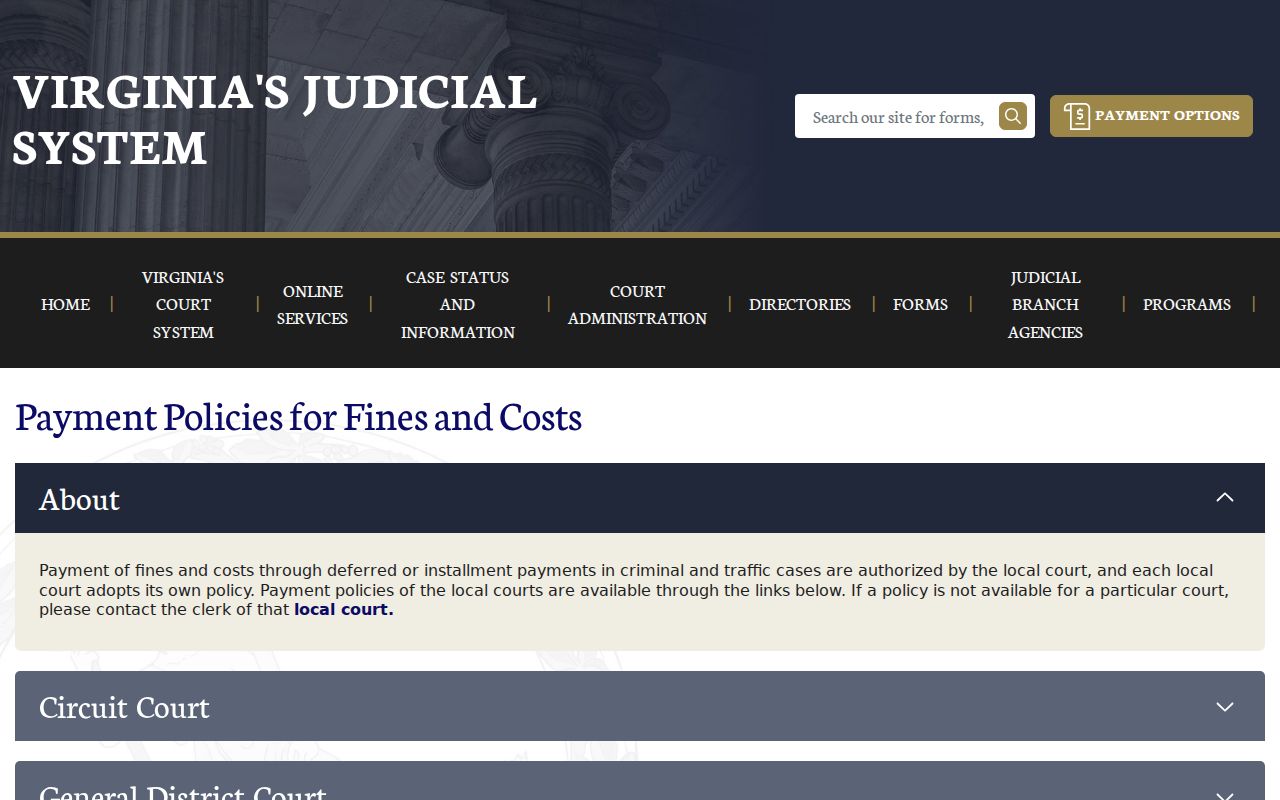
Use the Charlotte GDC policy with direct clerk confirmation.
Which Charlotte County Court Issued It
A capias stays with the court tied to the underlying matter. Check the heading on the summons, payment notice, or docket. If the paper is missing, provide the clerk with the person’s name and approximate case date privately, then ask for the exact process title and next court step.
The Sheriff may serve process, but the issuing court controls whether it is recalled. Virginia court public-record guidance sends case-file requests to the proper clerk; it does not create a single countywide warrant file.
Charlotte County Bench Warrant Records
To request a copy, identify the court and ask whether the document is public, sealed, or subject to redaction. Court search and copy costs may apply. For Sheriff service records, use a separate Virginia FOIA request and describe an existing record or a date range without asking for a private-person roster.
Keep any order showing recall, a continuance, or a new date. Online systems may not reflect a court action at once. Ask the clerk how to confirm that the process has changed in the record.